



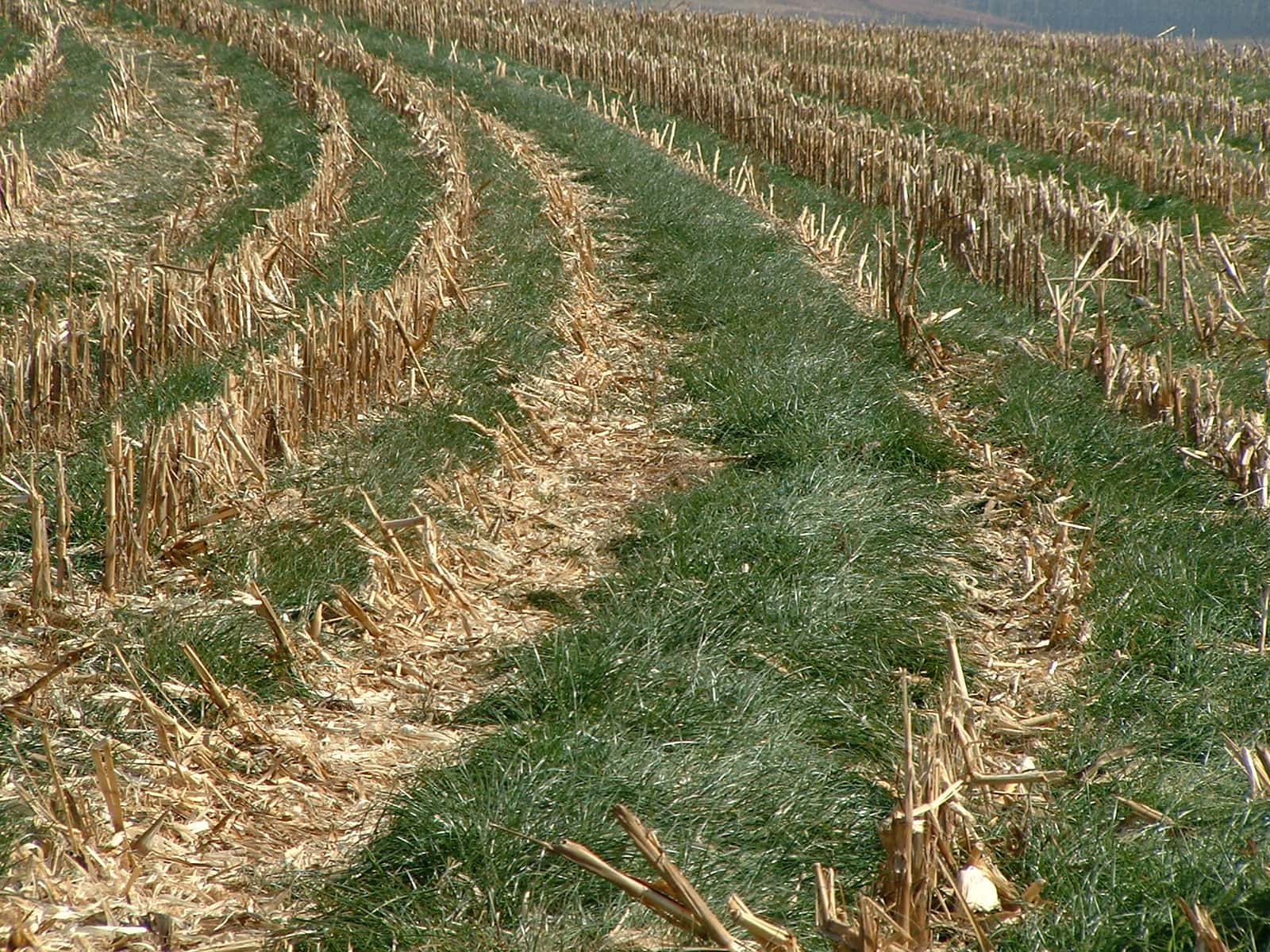
Cover crops were once a relic of farming in the old days, but farmers and agriculture experts have found them to be useful in the modern world to encourage soil health and water quality. You might have noticed what appears to be grass growing in local fields, but those are in fact cover crops such as cereal rye or oats. Meaghan Anderson, Agronomist for Iowa State University Extension and Outreach for Washington and Johnson Counties, says, “The true definition of a cover crop is some type of plant that you would leave out on your field. Usually it would be seeded in the fall, either shortly before your crop is harvested or shortly after your crop is harvested. And essentially it’s left to grow there, either through the fall and spring or potentially just through the fall, to provide your soil benefits such as protection from erosion, potentially increased organic matter, and especially holding on to the nitrogen that we lose to our waterways during the fall and the spring.”
Anderson says Southeast Iowa has been leading the way in cover crops, though she feels the state still has a long way to go. One barrier many farmers don’t want to deal with is the cost involved, which includes purchasing and planting the seeds, and herbicides for terminating the plants in the spring. Anderson believes since farmers don’t receive any income from cover crops, some are hesitant to spend money on them. With that in mind, there are cost shares implemented by the state and federal government to ease the financial burden on farmers. Washington County was number one in the state last year at using government cost share to implement cover crops. Anderson is hopeful more farmers will see the benefits of using cover crops, which she feels outweighs the cost.