



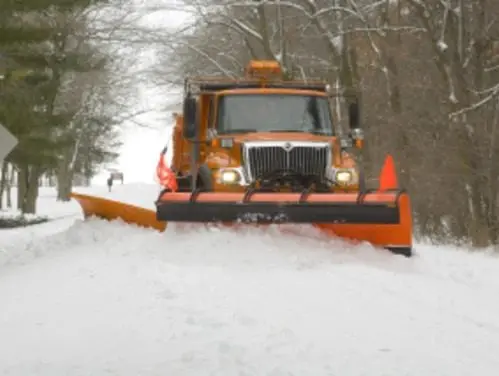
When winter weather strikes, snow plows clear the way so drivers can get back onto the roads as soon as possible. However, if you still need to drive, and find yourself sharing the road with a plow, be mindful of the ways plows operate to keep yourself and others safe. Over the weekend, Washington received 5.5 inches of snow while other areas recorded 6.3 inches in Riverside and 6 inches in Muscatine.
Craig Bargfrede is the Winter Operations Administrator with the Iowa Department of Transportation. He says that before a predicted storm, DOT staff watch weather forecasts to determine where the plows will be needed. These forecasts also provide the DOT with information that helps them decide a road treatment strategy.
Snow plows often have a large speed differential between them and other vehicles on the road. Plows travel anywhere from 10 miles per hour to around a top speed of about 40. At higher, normal highway speeds, plowing is not as effective. Bargfrede says, “That speed differential is one we talk about a lot, where folks are approaching us or meeting a plow, they need to understand that differential. Especially when they’re coming up behind us from the rear. They can quickly close on us and not even realize it.”
Bargfrede also says people should be mindful of the snow cloud that can be kicked up by the plow as it goes about its work. If you see a cloud, he says, there is a high chance there is a plow directly ahead, hidden by the cloud.
It is never safe to pass a snow plow. It is actually safer to follow behind a plow, because the road is actively being treated in front of anything that might be following behind. Furthermore, plows may make sudden movements or hug the center line, making passing more difficult. Ultimately, Bargfrede says the DOT preaches patience, both from the plow driver and other drivers on the road.